While studying architectural engineering at the University of Waterloo, Sarah Furtado-Herzig found herself increasingly looking forward to the design studio part of the course. “I loved the creative freedom, conceptual thinking, and the iterative design process of shaping spaces.”
For her co-op placement, Furtado-Herzig, of King City, Ont., chose to work with an architecture firm, which confirmed her desire to pursue architecture. She graduated from her five-year undergraduate program in 2023 with a Bachelor of Applied Science in Architectural Engineering, specializing in building systems.
As she prepared her M.Arch application portfolio, “my goal was to demonstrate that I understood the creative and technical aspects of building design, while showing how my engineering background could enrich my work in a master’s of architecture,” she explains.
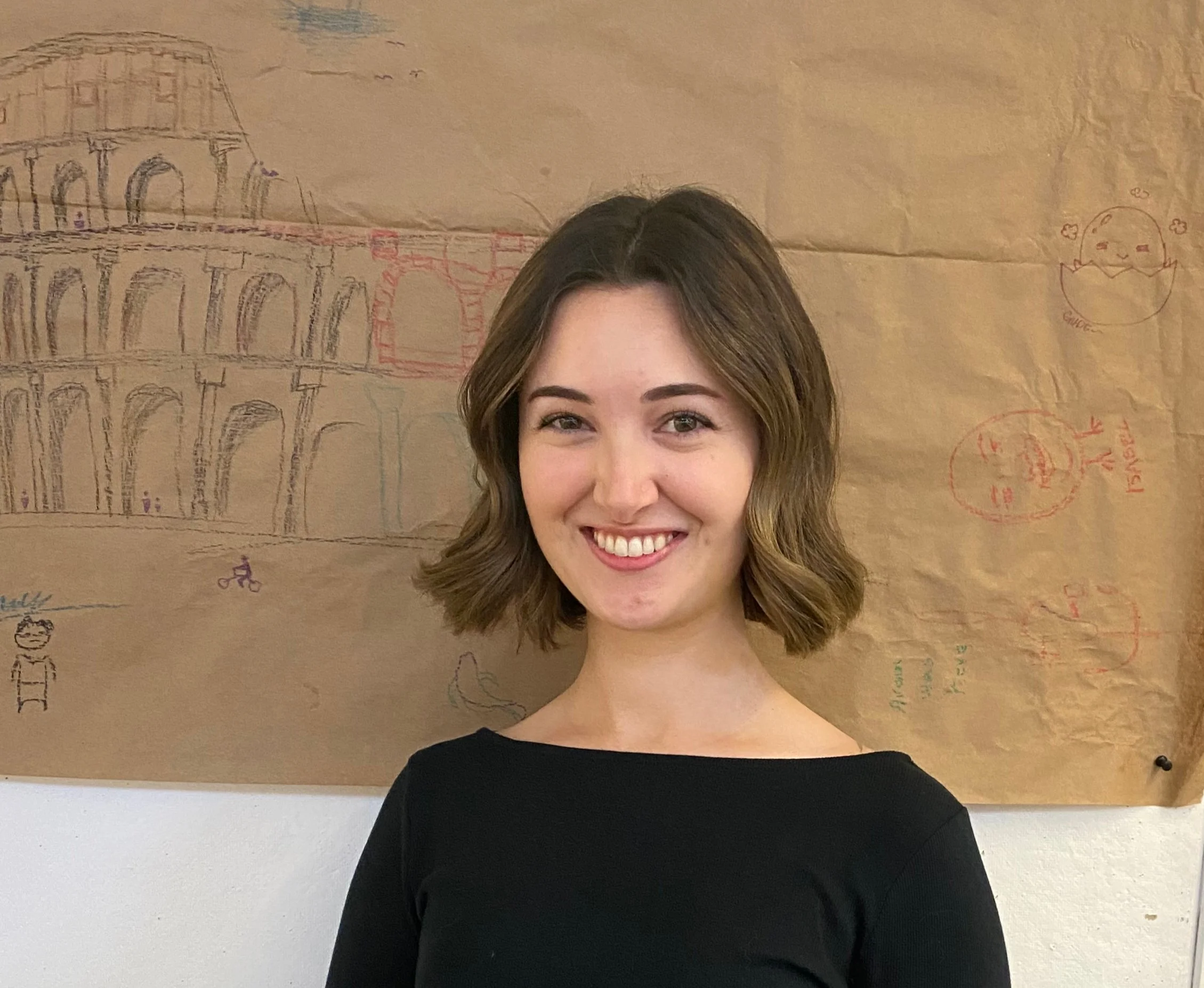
Sarah Furtado-Herzig holds a Bachelor of Applied Science in Architectural Engineering.
“I’m happy I made the switch into architecture. I’m grateful to have my engineering background as well, which continues to inform my approach to design.”
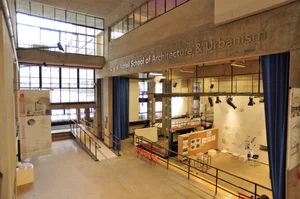
In the fall of 2025, Furtado-Herzig, 25, started the three-year Master of Architecture program at the Azrieli School of Architecture & Urbanism. She describes the experience as both challenging and rewarding.
“The program pushes us creatively and intellectually, and while the workload can be intense, the process has been very fulfilling,” she says. “Every project feels like an opportunity to refine my skills, as well as my understanding of space, people, and design.”
She adds, “Switching fields can feel intimidating, but it’s also incredibly empowering to find a community with the same interests as you. It’s never too late to change career paths and find what truly inspires you. For me, the shift to architecture has been extremely rewarding, and I’m excited to see where it leads me next.”
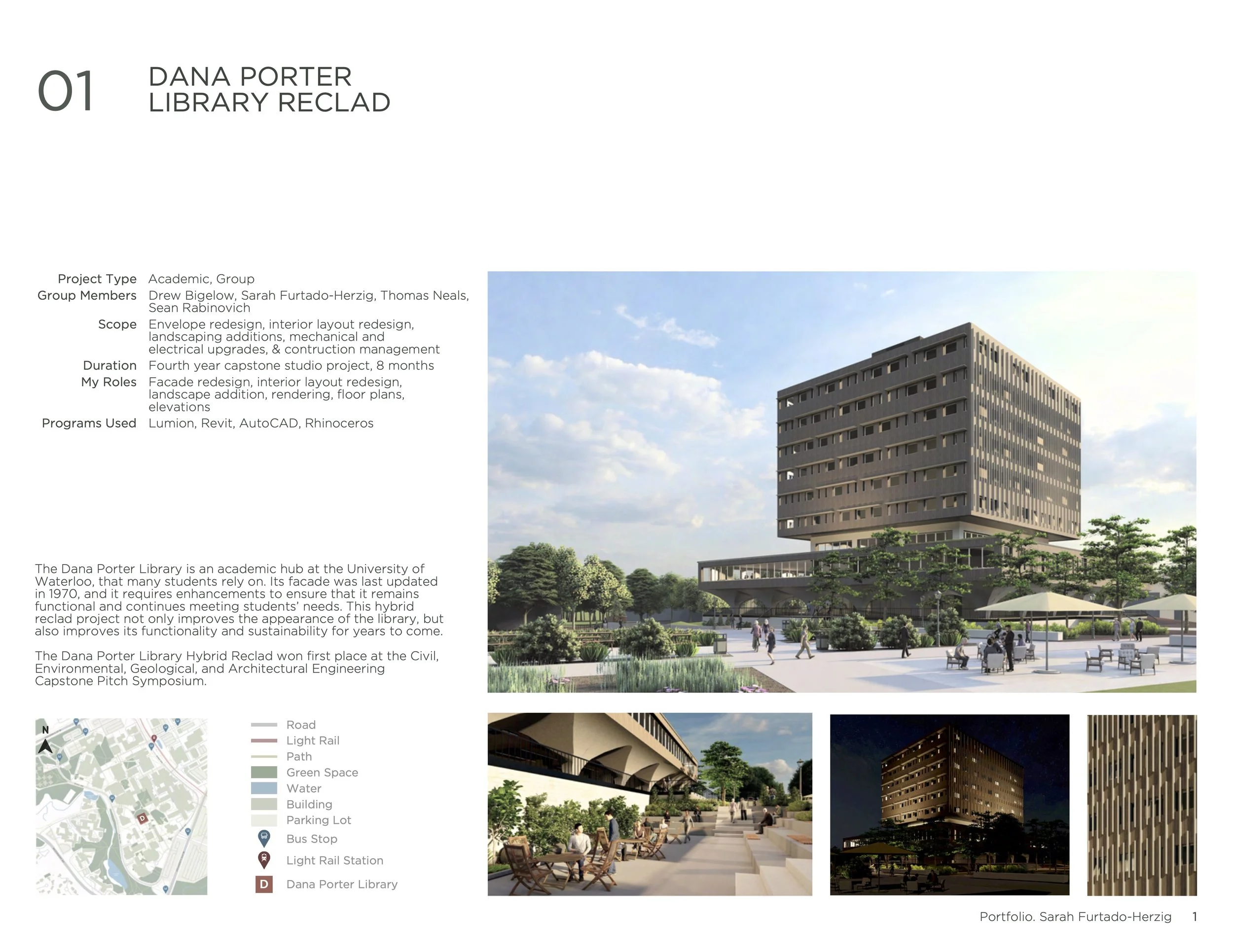
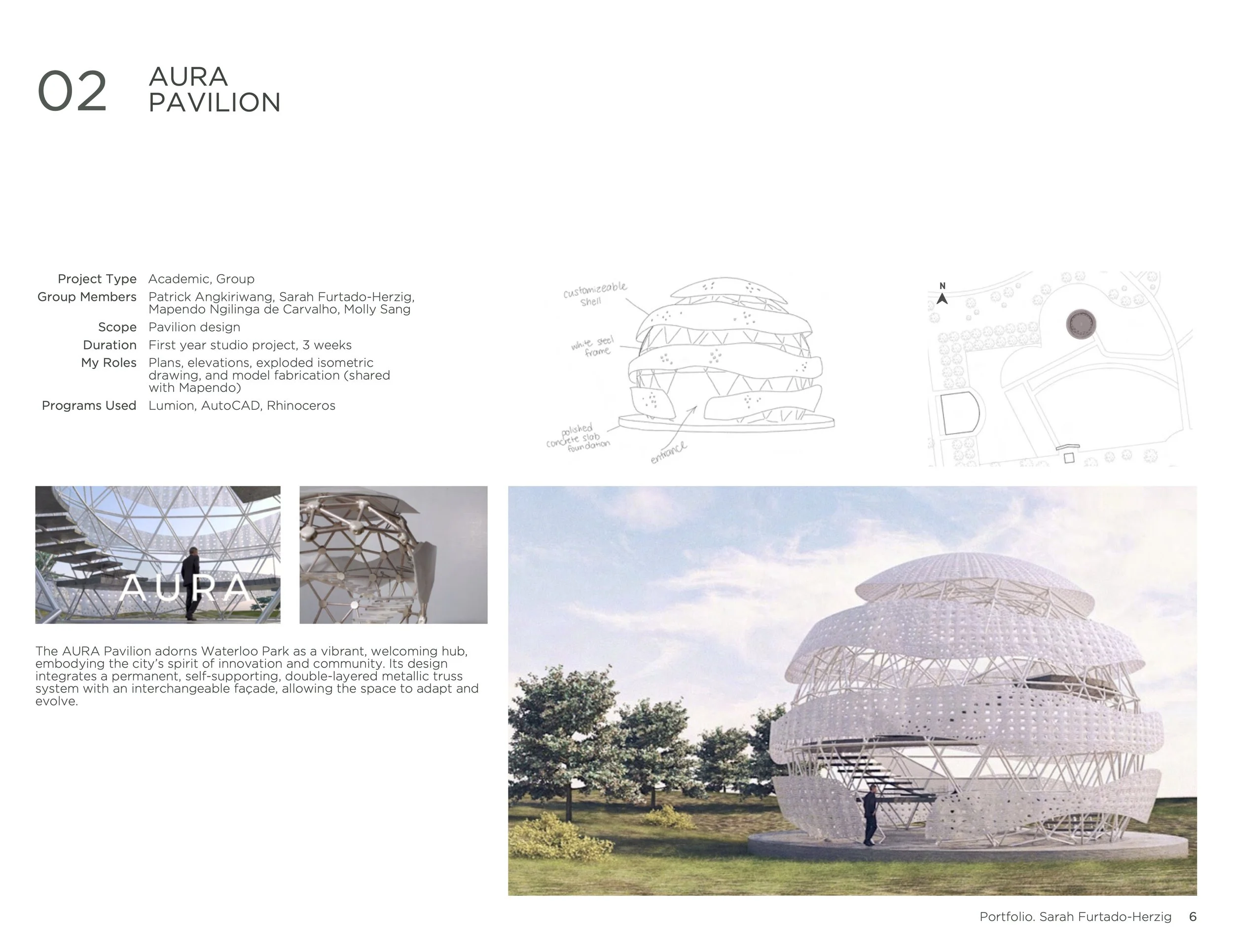
Read a Q&A with Sarah Furtado-Herzig and see images from her portfolio below.
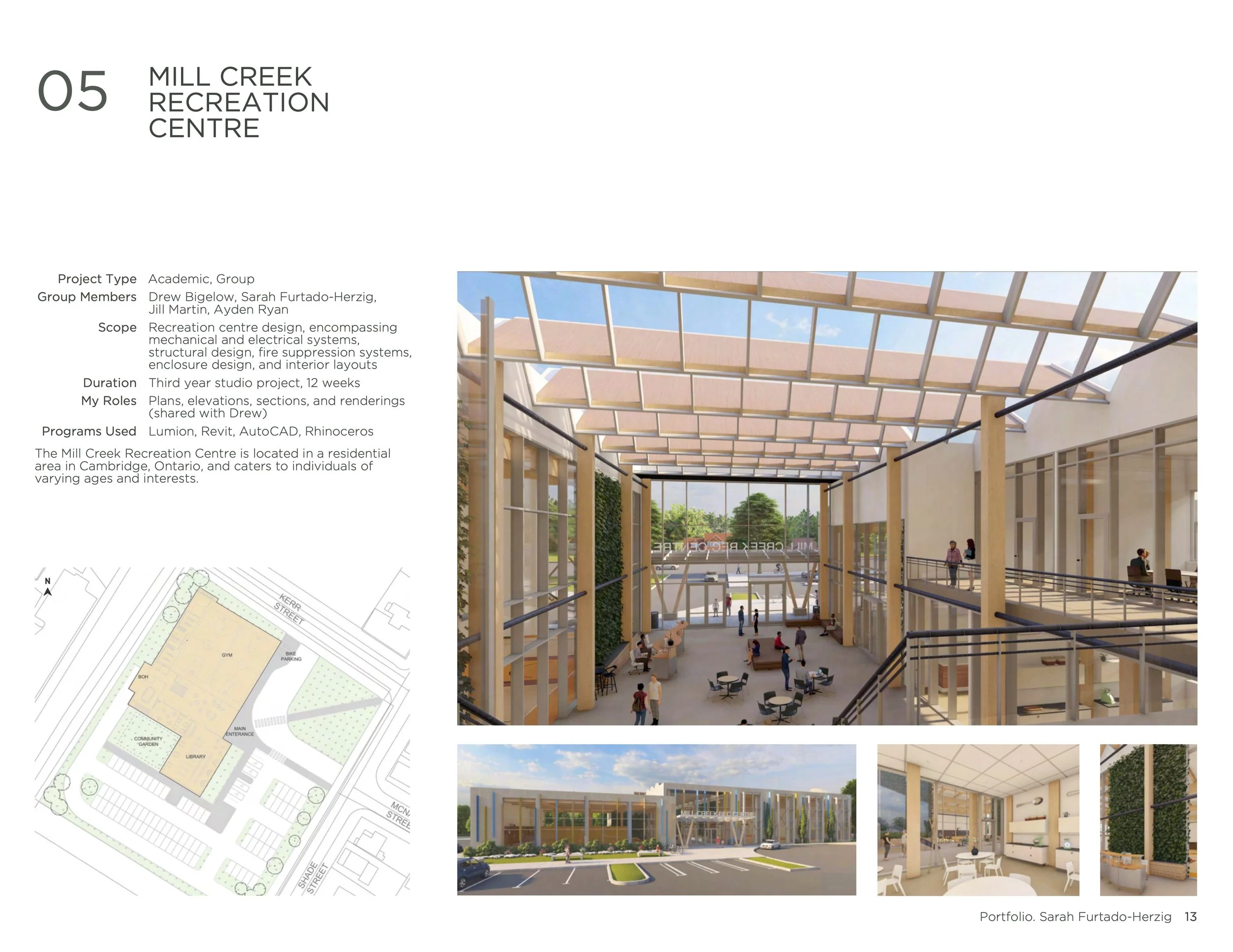
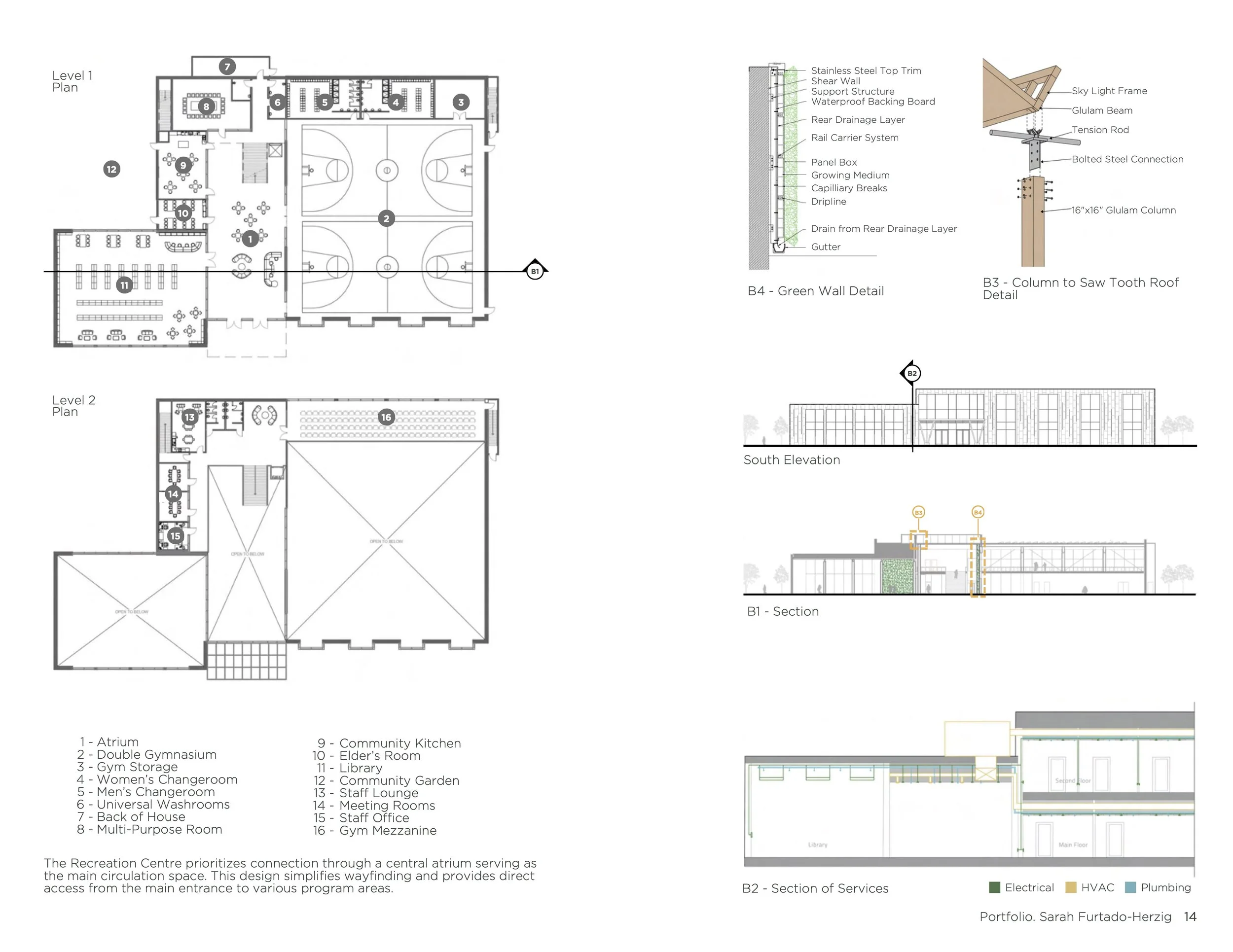
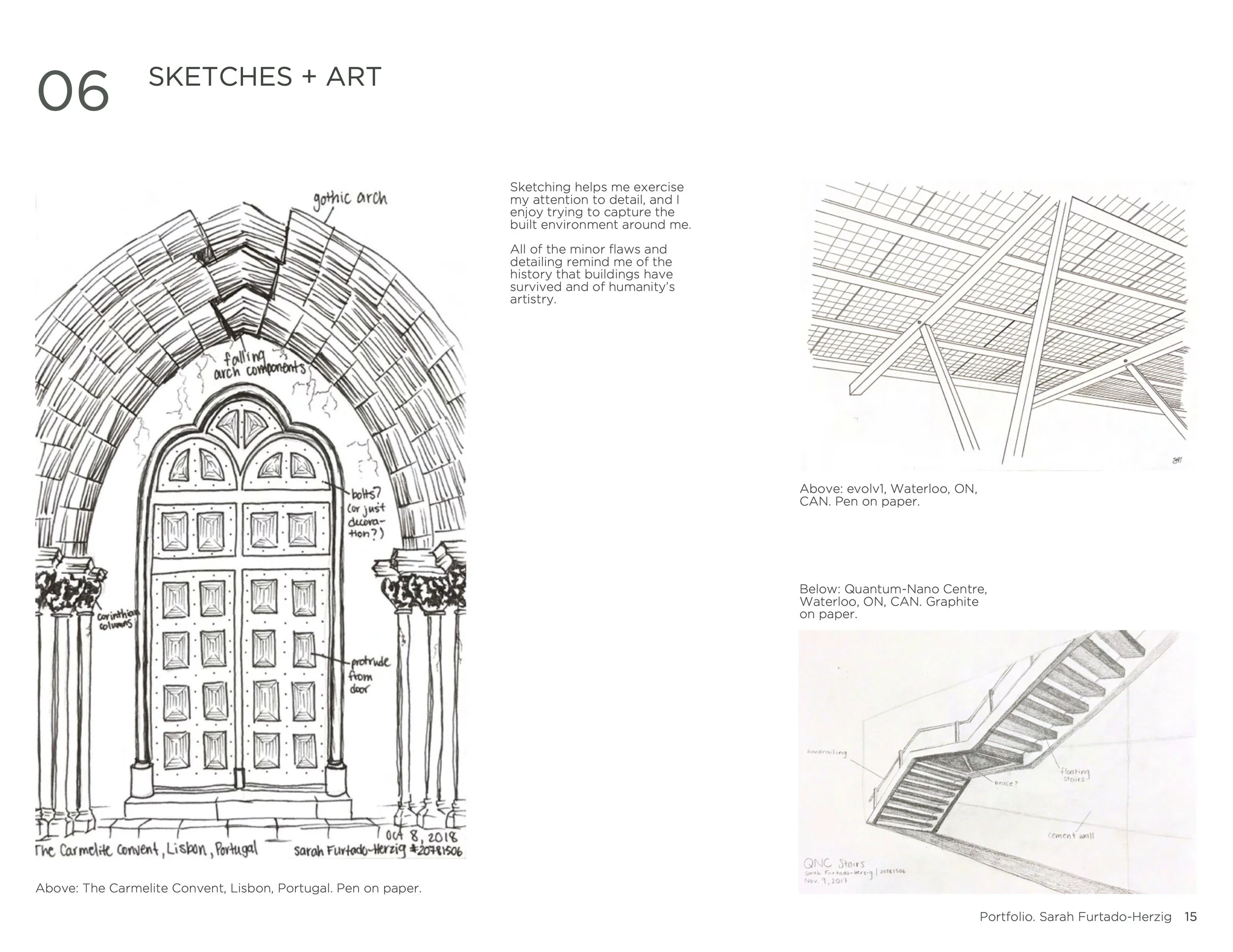
“I would describe my portfolio as a well-rounded representation of both my design sensibilities and my technical knowledge. It included a selection of architectural design work from my undergraduate studio courses, alongside examples of 3D modelling, rendering, construction detailing, and structural work. ”
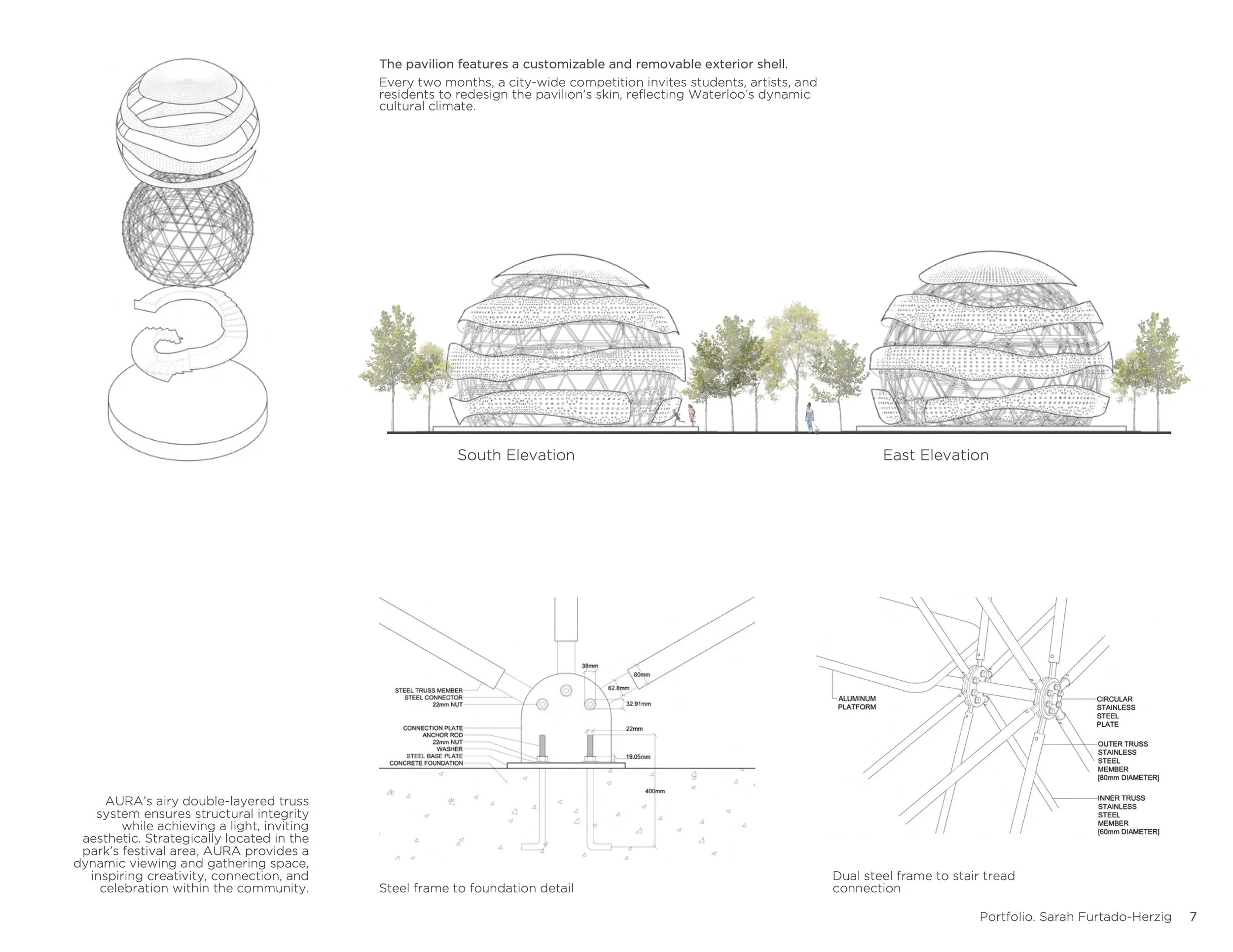
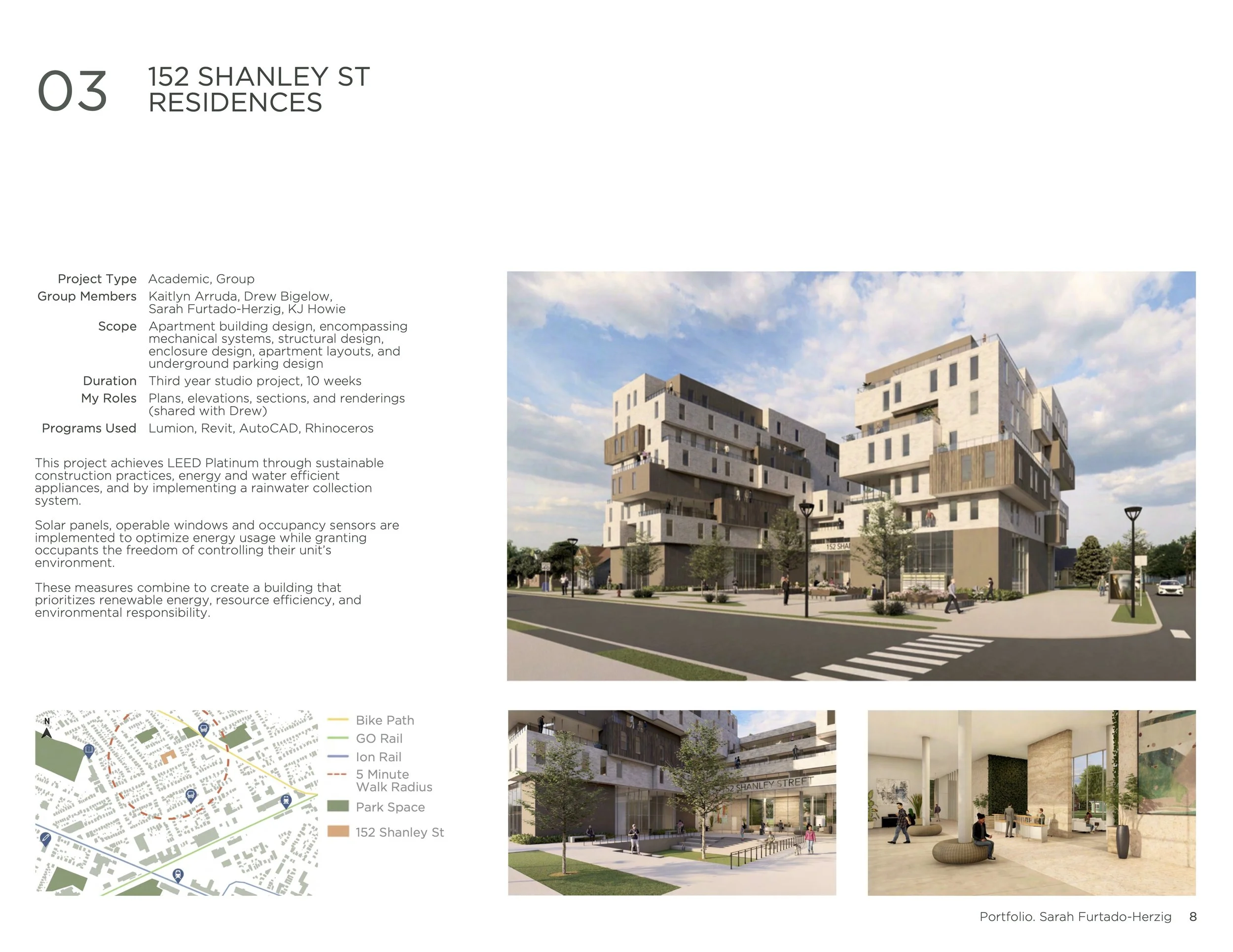
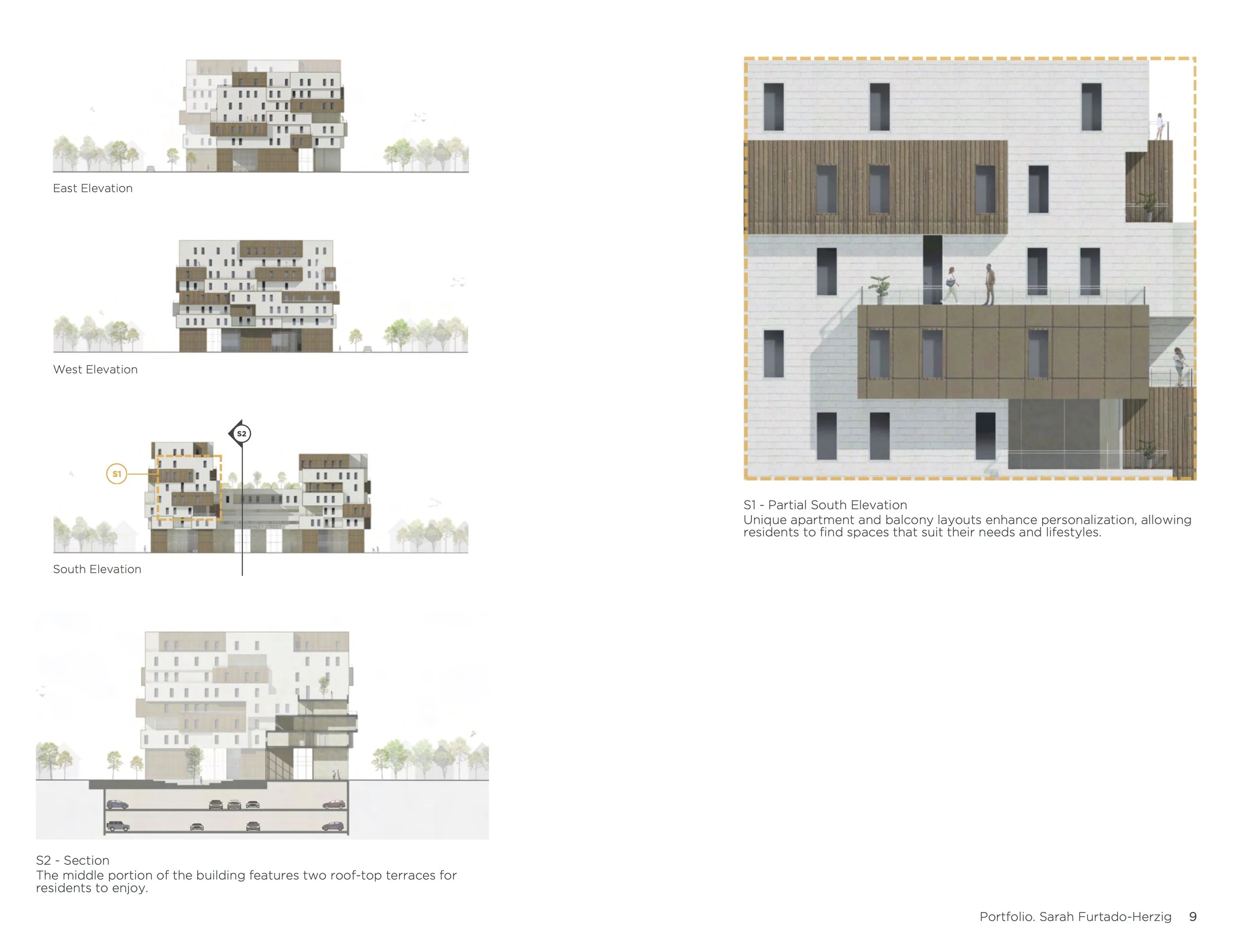
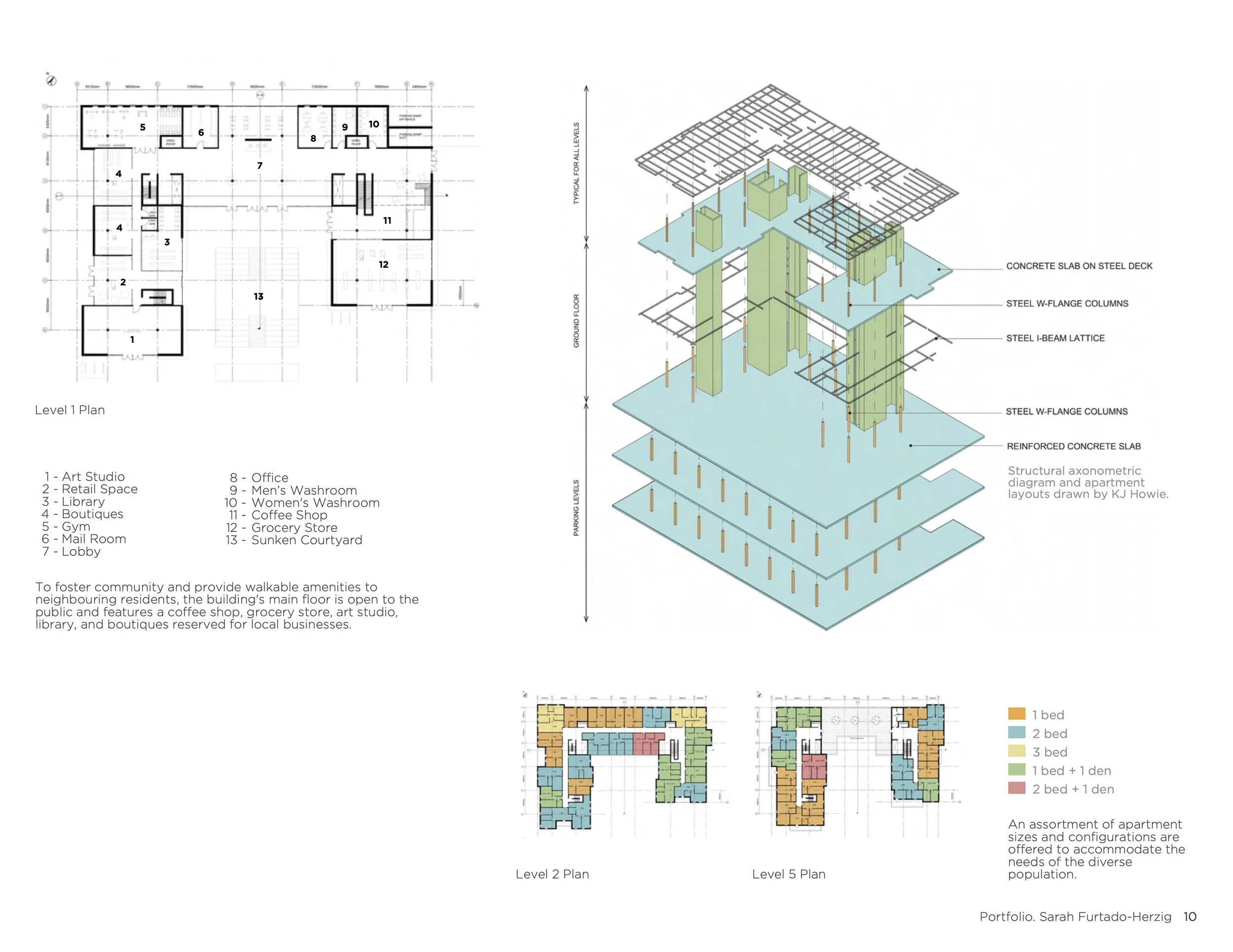
Q&A with Sarah Furtado-Herzig
What were you doing before, and why did you get into that field?
Before starting my master’s in architecture, I studied architectural engineering at the University of Waterloo. I was drawn to the program because it focused on both the technical side of engineering and the creativity of architecture. I’ve always been interested in how buildings function, and at the time, I was conflicted between exploring the engineering behind buildings or the architecture. Architectural engineering allowed me to study both.
How did you decide to switch to architecture?
As I progressed through my undergrad, I found myself looking forward to our studio courses more and more. I loved the creative freedom, conceptual thinking, and the iterative design process of shaping spaces. That realization led me to seek out a co-op position at an architecture firm. During that co-op experience, I became certain that I had more of a passion for architecture than I did for engineering. From that point on, I knew I wanted to pursue architecture more seriously after completing my degree.
How did you negotiate a discipline change?
The switch has been relatively seamless for me, mainly due to the way the architectural engineering program was structured. We were already exposed to design studios, so I had a good foundation in the design process and an understanding of what to expect from an architecture master’s program. To prepare, I reached out to mentors and friends who had gone through architecture master’s programs. Their advice and experiences helped me confirm that this was the right fit for me.
How would you describe your application portfolio? What were you trying to convey?
I would describe my portfolio as a well-rounded representation of both my design sensibilities and my technical knowledge. It included a selection of architectural design work from my undergraduate studio courses, alongside examples of 3D modelling, rendering, construction detailing, and structural work. My goal was to demonstrate that I understood the creative and technical aspects of building design, while showing how my engineering background could enrich my work in a master’s of architecture.
Why did you choose Carleton?
I chose Carleton because of the school’s strong culture and sense of community. When I spoke with alumni, they all spoke very highly of their experiences, emphasizing the quality of education as well as the support they received from professors and peers. It was described to me as an environment that encourages exploration and collaboration, which made my decision easy.
How would you describe your experience of the three-year M.Arch program?
So far, my experience has been both challenging and rewarding. The program pushes us creatively and intellectually, and while the workload can be intense, the process has been very fulfilling. Every project feels like an opportunity to refine my skills, as well as my understanding of space, people, and design.
What has been the biggest challenge/obstacle?
One of my biggest challenges has been developing confidence in my own design voice. Coming from a more technical background, I initially focused on performance, function, and feasibility, but architecture requires that you create a clear experience-centred narrative. Learning how to express that narrative in my projects has been a valuable part of the process.
How are you overcoming it?
To overcome this, I’ve been focusing on what drives my projects, conceptually rather than purely technically. I’ve learned to further embrace the iterative design process, using sketches and getting as much feedback as possible from professors, teaching assistants, and my peers.
What’s the best part?
The people are by far the best part of the program. The students, professors, and TAs are all incredibly supportive and passionate about what they do. There’s a true sense of community, and everyone wants to see each other succeed, which creates such an inspiring atmosphere to learn in.
Are you happy you did it?
I’m very happy I made the switch into architecture. It’s felt like the right path for me since my first architectural co-op. I’m grateful to have my engineering background as well, which continues to inform my approach to design.
What kind of career do you envision for yourself?
I envision myself becoming a licensed architect, ideally working on healthcare projects. I’m also interested in project management and the intersection between design, building performance, and user well-being. Ultimately, I would like to contribute to projects that improve people’s everyday experiences through thoughtful and sustainable design.
What advice would you give to someone considering a pivot?
I would advise them to do research and talk with people in the field that they’re interested in. Don’t be afraid to take the leap, even if you need to step out of your comfort zone. I would remind them that no experience is wasted; everything you learn along the way becomes a part of your perspective and skill set.
Switching fields can feel intimidating, but it’s also incredibly empowering to find a community with the same interests as you. It’s never too late to change career paths and find what truly inspires you. For me, the shift to architecture has been extremely rewarding, and I’m excited to see where it leads me next.